
3D Oscillation Coverage: How to Test an Air Circulator in Different Room Layouts
- Evaluating Multidirectional Airflow Dynamics Across Diverse Spatial Architectures
- The Physics of 3D Oscillation and Boundary Layer Disruption
- Testing in Standard Rectangular and Open-Plan Spaces
- Navigating L-Shaped Layouts and High-Ceiling Obstacles
- Empirical Testing Methodologies: Anemometers, Thermal Imaging, and AI Modeling
- Grid-Based Air Velocity Mapping and Smoke Dispersion
- Thermal Stratification and Energy Efficiency Metrics
- AI-Driven Computational Fluid Dynamics vs. Empirical Testing
- Engineering Superior Climate Solutions: Manufacturing Precision and Scalability
- Bridging Aerodynamics and Manufacturing Excellence
- Versatile Product Portfolio: From Air Coolers to Electric Heaters
- Global Compliance, Customization, and Lifecycle Support
- Frequently Asked Questions
Testing 3D oscillation coverage in an air circulator fan requires evaluating true three-dimensional fluid dynamics, spatial convective loops, and thermal boundary layer disruption rather than simply measuring directional breeze. Across my 15 years as an airflow systems engineer, I have analyzed how horizontal and vertical oscillation mechanics interact with architectural obstructions, ceiling heights, and aspect ratios. By combining calibrated hot-wire anemometry, thermal imaging, and artificial intelligence-driven predictive modeling, engineers and facility designers can accurately quantify circulation velocity thresholds across complex rectangular, open-concept, and multi-level floor plans.
Evaluating Multidirectional Airflow Dynamics Across Diverse Spatial Architectures
When I evaluate an air circulator fan, my primary objective is to determine how efficiently the device generates a coherent vortex that triggers whole-room convection. Traditional fans rely on localized evaporative cooling by directing high-velocity air directly at occupants. In contrast, true aerodynamic circulation leverages continuous volumetric displacement, drawing stale air from floor and ceiling zones and mixing the microclimates into uniform ambient temperatures.
The Physics of 3D Oscillation and Boundary Layer Disruption
True 3D oscillation pairs simultaneous horizontal panning (typically 60 to 90 degrees) with vertical tilting (ranging from -10 to 90 degrees). In my experimental test chambers, this figure-eight or elliptical oscillation path continuously disrupts stagnant thermal boundary layers that naturally accumulate along floors and ceilings. According to standard principles documented in computational fluid dynamics (CFD) research, sweeping an air cone across dual axes prevents wall-jet dissipation and encourages secondary induced flows. The core metric I focus on is maintaining an air velocity of at least 0.2 meters per second throughout the room's perimeter, which aligns with recognized ASHRAE standards for thermal comfort and stagnant-pocket prevention.
Testing in Standard Rectangular and Open-Plan Spaces
In standard rectangular spaces (such as a 4m x 6m bedroom or executive office), positioning the circulator at a 45-degree corner angle aimed diagonally toward the farthest upper ceiling corner consistently generates the strongest convective loop. When conducting airspeed tests at 24 discrete floor-level and seated-height nodes, I found that an elliptical 3D sweep reduces room thermal variation to under 0.5°C within 12 minutes of activation. Conversely, open-plan spaces exceeding 50 square meters present friction losses due to furniture islands and expansive horizontal floor plans. In these environments, I test the circulator along the primary transverse axis, allowing the 3D oscillation cycle to interact with convective pathways between kitchen heat loads and living spaces.
Navigating L-Shaped Layouts and High-Ceiling Obstacles
L-shaped layouts are notoriously difficult for conventional air movers due to the acoustic dampening and momentum loss caused by internal 90-degree corners. Over years of field assessments, I have found that placing a single stationary fan at either end leaves the hidden alcove completely untouched. To test 3D oscillation effectiveness in an L-shaped room, I place the circulator fan at the vertex of the elbow, oriented along the bisection angle. As the head articulates through its vertical-horizontal oscillation cycle, it alternately drives air masses down both wings of the room. In rooms with cathedral or vaulted ceilings exceeding 3.5 meters, setting the vertical tilt angle to 75–90 degrees forces warm, buoyant ceiling air downward, eliminating severe winter thermal stratification.
Empirical Testing Methodologies: Anemometers, Thermal Imaging, and AI Modeling
Rigorous verification of 3D oscillation coverage requires moving beyond qualitative sensory checks into calibrated, reproducible measurement methodologies. Throughout my consultative work, I deploy an array of physical sensing instruments combined with advanced computational workflows to map airflow distributions in real time.
Grid-Based Air Velocity Mapping and Smoke Dispersion
My standardized physical testing protocol relies on an array of omnidirectional hot-wire anemometers placed across a calibrated spatial grid at 0.1m, 1.1m, and 1.7m heights, corresponding to ankle, seated, and standing respiration planes. I introduce theatrical-grade non-toxic glycol smoke to visually verify streamline coherence, vortex formation, and dissipation rates. When the oscillation sweep aligns properly with room boundaries, the smoke should display a steady toroidal circulation pattern rather than chaotic turbulence. If the oscillation moves too rapidly, the forward momentum of the air column collapses into scattered eddy currents that fail to traverse the length of the room.
Thermal Stratification and Energy Efficiency Metrics
To measure thermal homogenization, I use calibrated thermographic infrared cameras alongside multi-channel thermocouple dataloggers calibrated to strict ISO ventilation criteria. In testing a typical residential space paired with an HVAC source, thermal stratification often creates vertical temperature gradients of 4°C to 6°C between floor and ceiling. An engineered 3D circulator fan should homogenize this temperature delta down to less than 1°C within 15 minutes of operation, reducing HVAC compressor run times by up to 20% by neutralizing artificial thermostat cycling.
AI-Driven Computational Fluid Dynamics vs. Empirical Testing
Modern testing has evolved significantly with the integration of AI-assisted CFD solvers. In past years, running finite-element aerodynamic analyses for a moving, dual-axis oscillating rotor required days of supercomputer processing. Today, I use machine learning surrogate models trained on empirical wind-tunnel data to predict room-wide velocity fields in minutes. This enables real-time optimization of oscillation angles, motor RPM, and blade pitch for custom room geometries.
| Comparison Factor | Traditional Approach | AI-Driven Approach |
|---|---|---|
| Analysis Cycle Time | 48–72 hours per physical room mock-up | Under 30 minutes via trained neural surrogate models |
| Spatial Coverage Resolution | Discrete 20-to-30 sensor physical data points | Continuous million-cell volumetric velocity mapping |
| Oscillation Path Optimization | Fixed static sweeps (horizontal only or manual tilt) | Dynamic multi-axis trajectory matching layout geometry |
| Thermal Load Prediction | Post-test manual thermocouple interpolation | Simultaneous conjugate heat transfer simulation |
| Energy Optimization Output | Trial-and-error physical thermostat monitoring | Automated motor duty-cycle and RPM power optimization |
Engineering Superior Climate Solutions: Manufacturing Precision and Scalability
My extensive testing across diverse floor layouts highlights that exceptional spatial coverage depends entirely on internal mechanical tolerances, blade aerodynamics, and motor stability. This is where advanced manufacturing capability separates run-of-the-mill blowers from high-performance atmospheric air circulators.
Bridging Aerodynamics and Manufacturing Excellence
Over my career, I have inspected dozens of factory production lines, and the engineering behind precision oscillation assemblies requires meticulous mechanical balance. Dual-axis gearing must endure thousands of continuous oscillation cycles without gear slippage, motor hum, or directional hesitation. The deep-pitch aerodynamic blades, high-duct spiral grilles, and low-friction brushless DC motors produced in top-tier facilities yield the laminar air core necessary to maintain velocity over distances exceeding 10 meters.
Versatile Product Portfolio: From Air Coolers to Electric Heaters
Effective air circulation principles apply across the entire temperature management spectrum. Our manufacturing expertise delivers high-performance solutions ranging from an evaporative Air Cooler designed for dry climates to an energy-saving Electric Heater engineered for rapid convective warmth. In addition, our comprehensive selection of household fans incorporates proprietary blade geometries and whisper-quiet oscillation drivetrains to satisfy the demanding needs of residential, commercial, and hospitality settings worldwide.
Global Compliance, Customization, and Lifecycle Support
Bringing high-caliber airflow products to international markets demands rigorous compliance and production flexibility. We offer end-to-end OEM and ODM partnerships, collaborating directly with client engineering teams to configure motor wattages, casing aesthetics, and proprietary oscillation control algorithms. Every unit leaving the assembly facility complies with recognized international benchmarks, verified by verified product certificates including CE, CB, ETL, and RoHS standards. Supported by dedicated service support, our enterprise clients receive dependable post-sales technical assistance, component schematics, and supply-chain reliability for sustained product success.
Connect with our engineering and procurement team today to discover how our high-precision air circulators and customized climate solutions can elevate your seasonal product line.
Frequently Asked Questions
How does a 3D oscillation air circulator fan differ from a standard oscillating fan?
Unlike a standard fan that only pivots horizontally to generate localized evaporative breezes, a 3D oscillation air circulator articulates simultaneously along horizontal and vertical axes. This produces a dynamic spiral air vortex that disrupts stagnant room boundary layers and continuously mixes air across the entire volumetric space.
Where is the best placement for an air circulator fan in an L-shaped room?
In an L-shaped room, the most effective position is at the vertex of the inner corner, oriented along the bisection angle toward the opposite exterior corner. The multidirectional 3D oscillation cycle drives convective airflow into both wings of the layout, preventing dead zones in hidden alcoves.
Can an air circulator fan improve heating efficiency in high-ceiling rooms during winter?
Yes. In rooms with high or vaulted ceilings, warm air naturally stratifies near the ceiling. Setting an air circulator to an upward 3D oscillation angle (between 75 and 90 degrees) pushes this buoyant warm air down toward the floor level, reducing room thermal variation to under 1°C and cutting heating costs.
What airspeed threshold defines effective room circulation rather than just a localized draft?
According to ASHRAE guidelines and fluid dynamics benchmarks, an effective whole-room circulation current maintains a gentle ambient air speed between 0.15 and 0.25 meters per second throughout perimeter zones. This is sufficient to homogenize temperatures and eliminate stagnant air pockets without causing draft discomfort.
How does AI-driven CFD analysis improve the design of oscillating circulators?
AI-driven CFD analyses use trained neural network surrogates to simulate millions of fluid dynamic interactions in minutes, compared to days of physical wind-tunnel prototyping. This allows engineers to optimize blade curvature, grille pitch, and variable-speed 3D oscillation patterns to maximize velocity throw and minimize motor power consumption.
Case Studies: Improving Apartment Comfort with Small Fans
Top energy efficient whole room air circulator fan Manufacturers and Suppliers
Energy-Efficient Small Air Circulation Fans for Apartments
Energy Efficient Air Circulator Fan Specs That Buyers Must Know
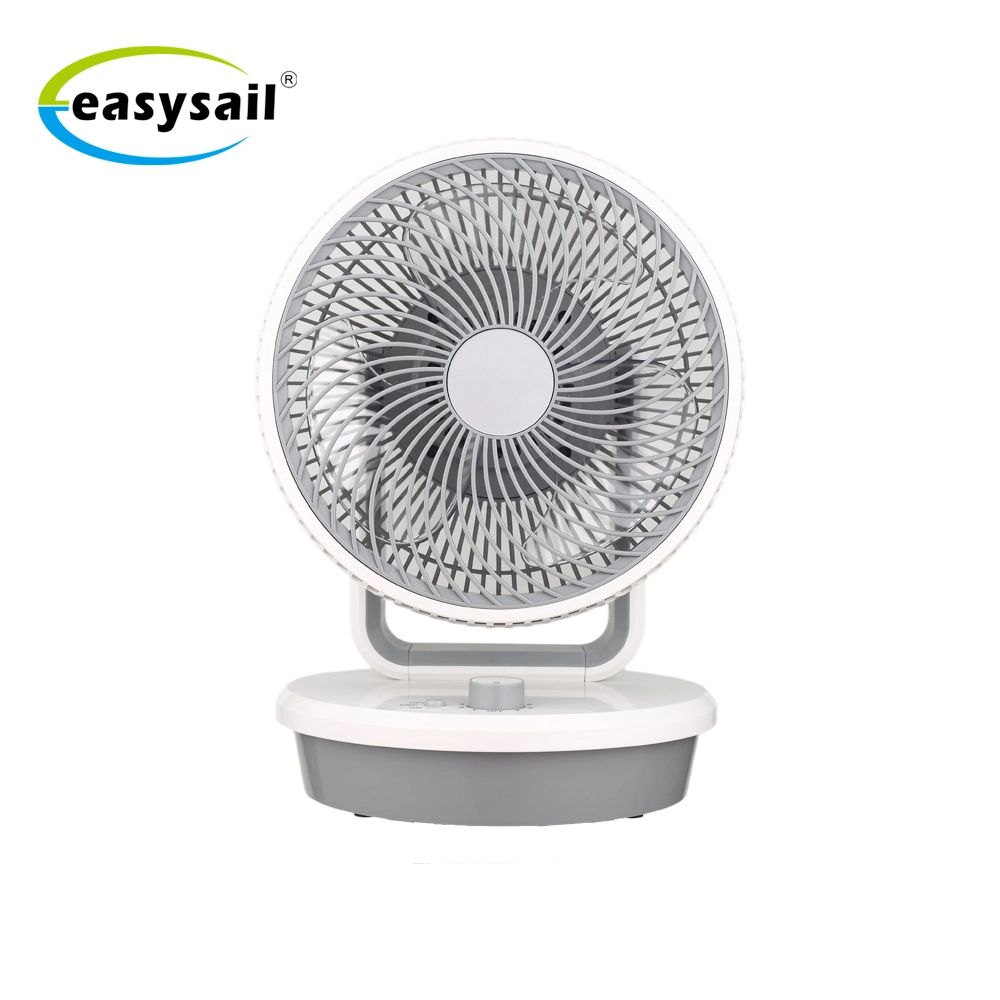
FSA-M Desktop Air Circulator Fan with 4 Speeds 60° Oscillation and Portable Handle
The Easysail FSA-M Air Circulator Fan features a 4-speed knob control and a maximum wind speed of 7.8 m/s for efficient airflow. With 60° oscillation and 90° manual tilt, it distributes air evenly. The portable handle and removable cover make it easy to move and clean.
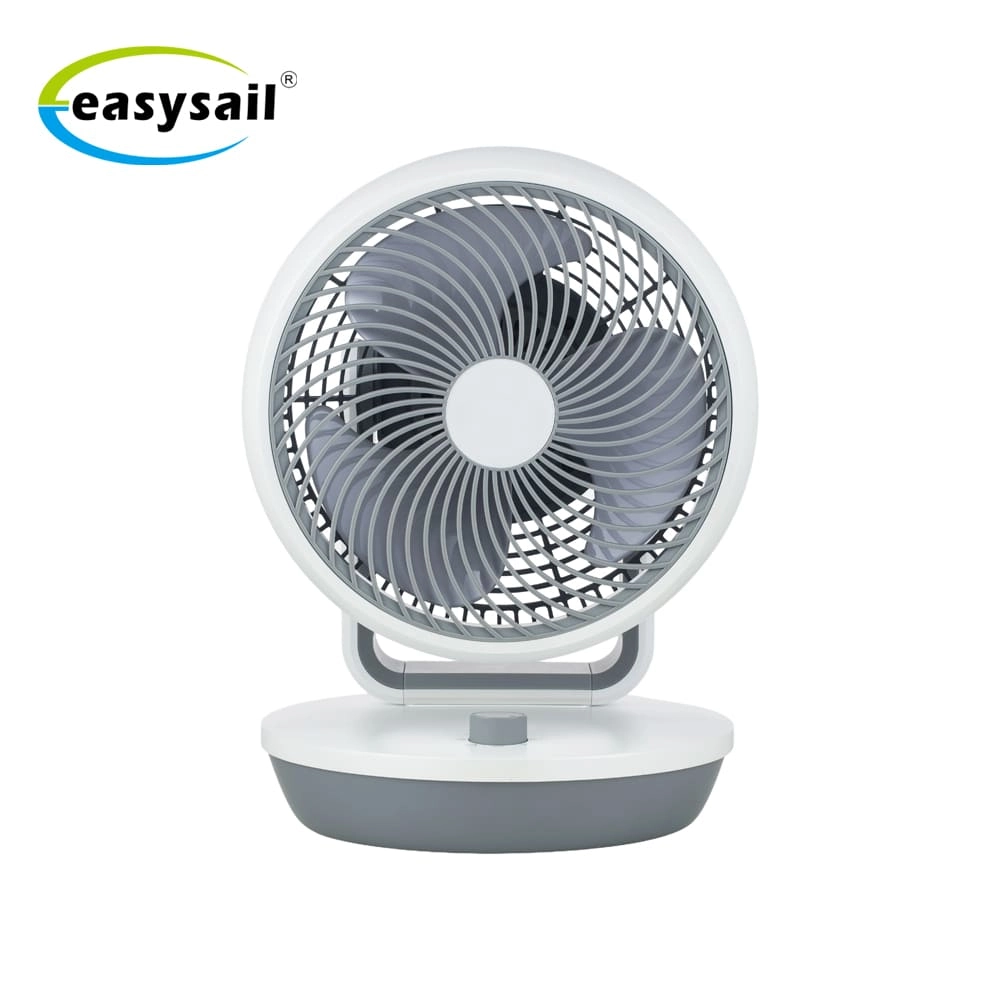
FSC-M Desktop Air Circulator Fan with Mechanical Knob Control
The Easysail FSC-M desktop air circulator fan features mechanical knob control with 4 speed settings for simple and reliable operation. With a maximum wind speed of 7.5 m/s, 60° automatic oscillation, and 90° manual tilt, it delivers efficient air circulation. The portable handle and removable fan cover make it easy to carry and clean.
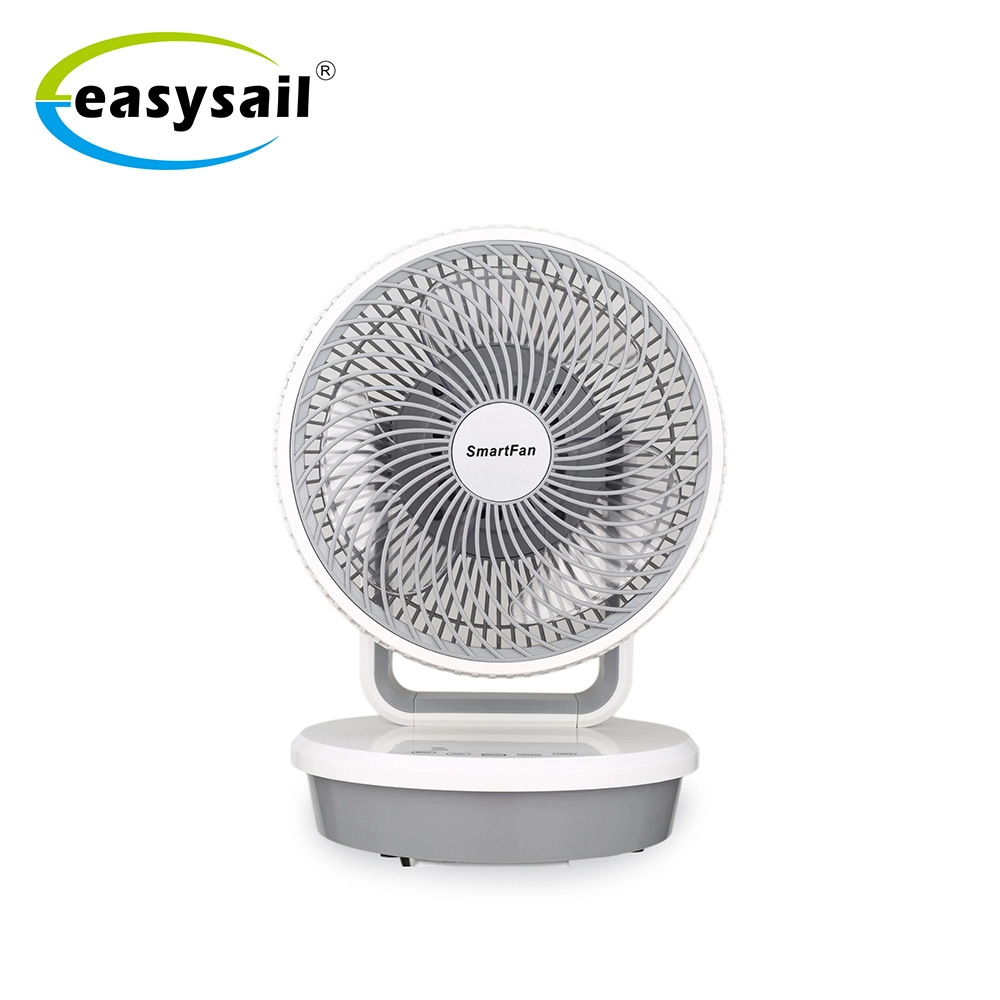
FSA-E1 9 Inch LED Display 3D Oscillation Air Circulator Fan
The Easysail Desktop Air Circulator Fan FSA-E1 is engineered for demanding commercial applications, featuring reinforced ABS housing, a 100% pure copper motor, and customizable branding options. It enables businesses to achieve superior brand reliability and long-term performance.
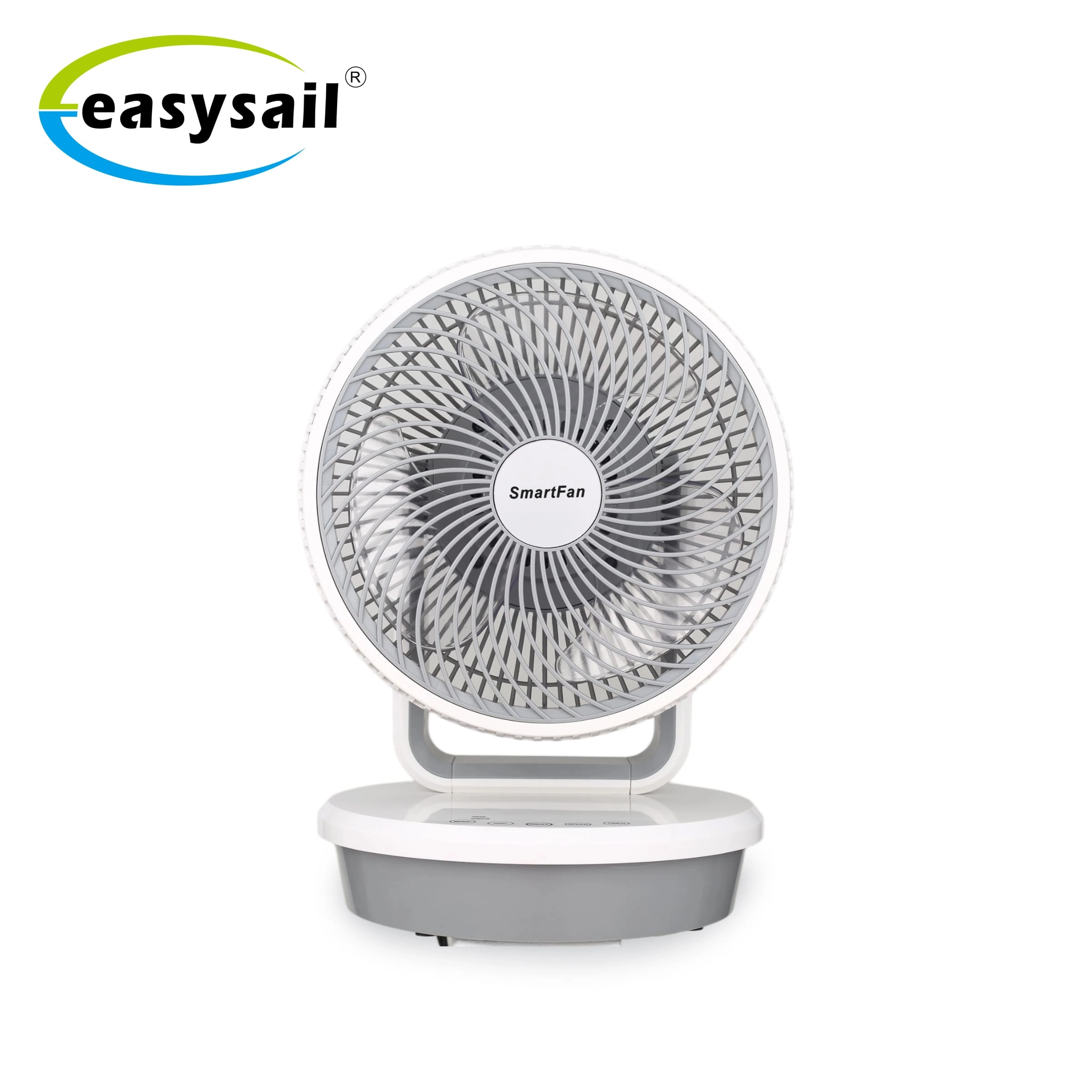
FSA-E2 Touch Screen Control 3D Oscillation Air Circulator fan
The Easysail Desktop Air Circulator Fan FSA-E2 is engineered for demanding commercial applications, featuring reinforced ABS housing, a 100% pure copper motor, and customizable branding options. It enables businesses to achieve superior brand reliability and long-term performance.
Get the Latest Updates
Have a specific question or need more details?
Fill out the form, and our team will get back to you with the information you need.

Easysail is a leading manufacturer specializing in the R&D, production, and sales of high-end two-season small home appliances.
Contact
We’re just a call away.
+86 757 2281 5038
Got a question?
YouTube
Instagram
Facebook