
Beyond the Breeze: The Thermodynamics of How Evaporative Coolers Actually Lower Room Temperatures
Summer heat is relentless, and central air conditioning is notoriously expensive. As consumers actively search for cheaper alternatives, they often land on evaporative coolers. But many people still wonder whether a device that uses ordinary tap water can actually cool a room.
Yes, they absolutely do. However, they achieve this thermal drop through pure thermodynamics, entirely bypassing the heavy compressors and chemical refrigerants found in traditional AC units.
The Physics of Phase Change: Endothermic Evaporation
Standard electric fans trick your brain. They blow room-temperature air across your skin to evaporate sweat. This cools your body temporarily, but the actual ambient room temperature remains exactly the same. Evaporative coolers work differently by using a basic principle of thermodynamics: evaporative cooling.
The physical mechanism is straightforward yet highly effective. The machine utilizes a water pump to continuously saturate a thick, high-density honeycomb cooling pad with water. A powerful internal fan then draws warm, dry air through this water-saturated medium.
As the hot air hits the wet filter, the water undergoes a rapid phase change—it shifts from a liquid to a gas. This physical transformation requires energy. The water extracts massive amounts of sensible heat directly out of the air to fuel this evaporation. Consequently, the internal fan shoots a significantly chilled breeze back into the room. It mimics the exact refreshing temperature drop you feel when wind hits your wet skin after stepping out of a swimming pool.
Performance and Climate Dependency
Because this cooling relies on thermodynamics, the surrounding environment completely dictates performance. These machines thrive in arid, desert-like climates.
In regions with exceptionally low natural humidity, the dry air can absorb a significant amount of water vapor quickly, maximizing the heat extraction process. Under suitable conditions, a high-quality evaporative cooler may reduce the surrounding air temperature by approximately 3–5°C (5.4–9°F). However, this is an estimated range rather than a guaranteed result, as actual performance depends on humidity, ventilation, room conditions and product design. Furthermore, because the device only powers a fan motor and a small water pump, you completely dodge the massive electricity spikes constantly associated with standard air conditioning.
The Hidden Health Benefit: Active Hydration
Air conditioners aggressively dehumidify spaces. Sitting in an AC-chilled office all day leaves people with dry skin, scratchy throats, and irritated sinuses.
Evaporative coolers offer a different approach. Because they utilize physical water evaporation, they act as true 2-in-1 climate devices. While they actively lower the room temperature, they simultaneously inject a continuous stream of fresh moisture into your living space. This dual-action cooling and humidifying creates a vastly superior physical comfort level for anyone suffering through a dry summer.
The Golden Rule: Cross-Ventilation is Mandatory
Using an evaporative cooler in a completely sealed room can reduce its cooling effectiveness over time. This is an important operational consideration for new buyers.
Because the cooler constantly adds water vapor to the atmosphere, the indoor humidity will eventually peak. Once the room air becomes completely saturated, the water on the internal honeycomb pad can no longer evaporate into the air. When evaporation stops, the endothermic heat exchange stops, and the cooling effect dies instantly.
To maintain better cooling performance, you must crack a window or leave a door slightly open. This vital cross-ventilation pushes stale, highly humid air out of the building while the cooler continuously pumps a fresh, icy stream inside.
FAQ
Will an evaporative cooler work efficiently in a tropical or humid climate?
Poorly. The entire cooling process relies on thermodynamics—specifically, water evaporating into dry air to absorb heat. If your local climate is already heavily saturated with moisture (high humidity), the water cannot evaporate quickly. The temperature drop will be negligible, and the room will simply feel sticky.
Do these coolers require heavy chemical refrigerants or exhaust hoses?
No. They run exclusively on tap water and basic electricity. By leveraging the natural endothermic evaporation process, there are no freon gases, toxic chemicals, or bulky window exhaust hoses involved.
Can I leave the cooler running in a completely closed bedroom overnight
Never. You must maintain proper cross-ventilation. Keep a bedroom window slightly open. If the room is completely sealed, the air becomes too humid, entirely stopping the evaporation (and thus the cooling) process, turning your room into a sauna.
Do Fans Actually Help with Air Circulation? The Truth About Air Circulator Fans
Top OEM Air Cooler Manufacturer: Energy-Saving & Eco-Friendly Cooling Solutions
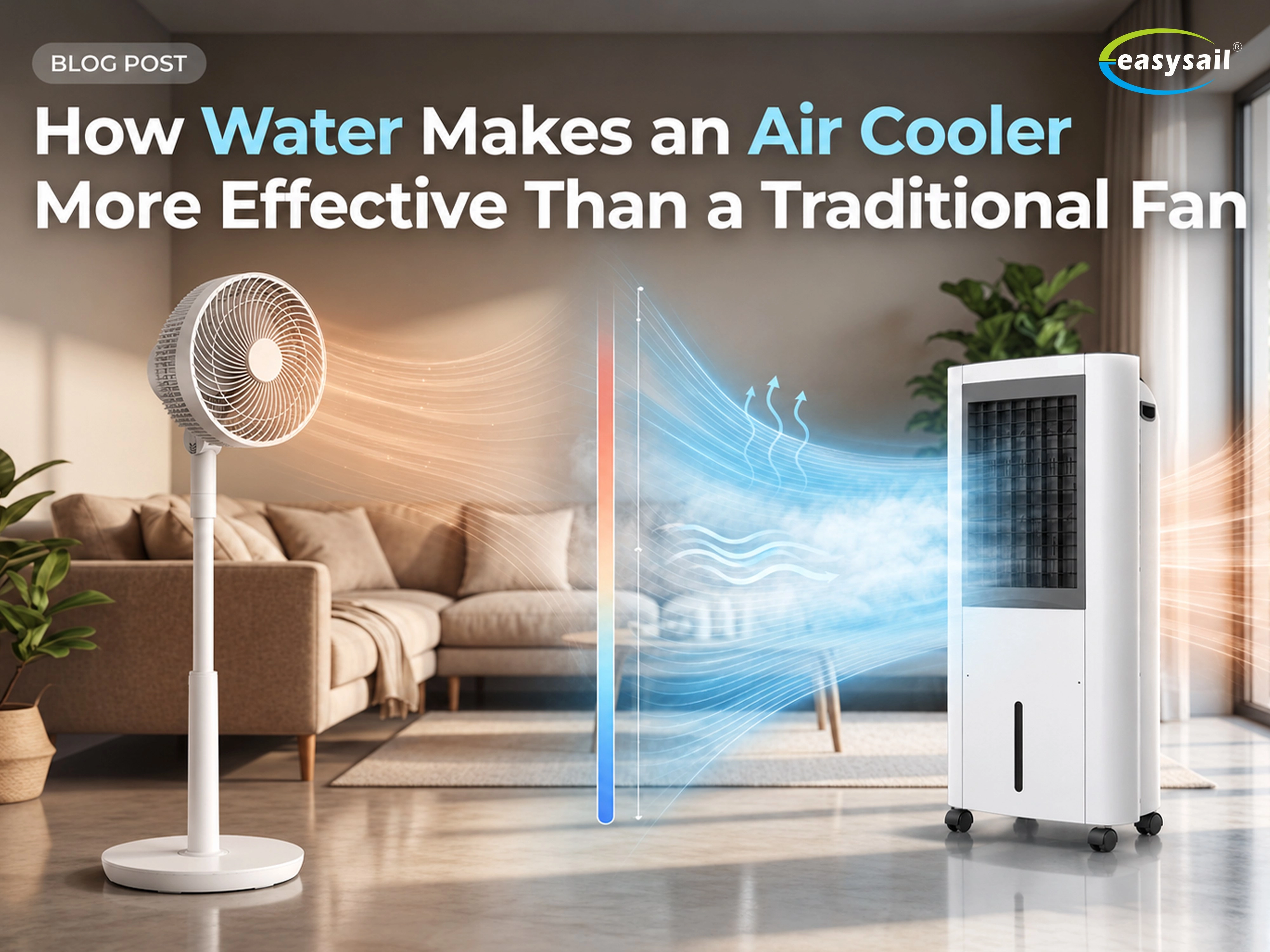
How Water Makes an Air Cooler More Effective Than a Traditional Fan
Why Smart Desktop Air Circulation Fans Are Becoming the Preferred Choice for Modern Workspaces

HWA-M Electric Wire Heater with Adjustable Thermostat
The Easysail HWA-M electric wire heater features 3 heat settings (Low Medium High) and an adjustable thermostat for flexible temperature control. Designed with a power indicator light and tip-over safety function, it ensures safe and reliable heating with simple and durable operation.

White Electric Ceramic Heater HPA-1
Easysail’s White Electric Ceramic Heater HPA-1 offers efficient, portable warmth with advanced ceramic technology. As a leading electric ceramic heater manufacturer, we ensure reliable performance and safety. Ideal for home or office, this compact heater delivers fast, energy-saving comfort wherever you need it.

HPA-1 PTC Electric Heater with Dual Heating Elements LED Display
The Easysail HPA-1 electric heater features dual PTC heating elements for fast and efficient heating. With LED display and electronic control, 3 modes, and adjustable temperature from 18–35°C, it ensures precise comfort. The remote control, 60° oscillation, timer, and safety protection system provide convenient and reliable use.

Electric Ceramic Heater HPA-S
Experience cozy warmth with the Easysail HPA-S Electric Ceramic Heater. This energy-efficient electric heater delivers fast, consistent heat, making it an ideal ceramic heater for any space. Enjoy reliable comfort and lower bills.
Get the Latest Updates
Have a specific question or need more details?
Fill out the form, and our team will get back to you with the information you need.

Easysail is a leading manufacturer specializing in the R&D, production, and sales of high-end two-season small home appliances.
Contact
We’re just a call away.
+86 757 2281 5038
Got a question?
YouTube
Instagram
Facebook