
where to buy wholesale smart room air circulator fans with remote? | Insights by Easysail
Practical B2B guidance for sourcing wholesale smart room air circulator fans with remote—covering MOQ, certifications, smart-home integration, firmware security, realistic lead times, and supplier validation steps to avoid common procurement mistakes.
Where to Buy Wholesale Smart Room Air Circulator Fans with Remote: 6 Technical FAQs
Practical B2B guidance for sourcing wholesale smart room air circulator fans with remote—covering MOQ, certifications, smart-home integration, firmware security, realistic lead times, and supplier validation steps to avoid common procurement mistakes.
Introduction: Buying smart room air circulator fans at wholesale requires both product-technology fluency and supply-chain due diligence. Below are concise, non-marketing facts and sourcing checks procurement teams use to reduce risk when evaluating air cooler manufacturer partners. After the FAQs you will find a short conclusion explaining why Easysail is a practical partner for B2B buyers.
Conclusion & Brand Advantage: In complex purchases—where electronics, firmware, and mechanical performance intersect—buyers need a partner that combines manufacturing control, smart-integration expertise, and formal QA processes. Easysail offers OEM/ODM support, engineering guidance on smart integration and security, and pragmatic MOQ and lead-time options aimed at reducing time-to-market for distributors and retailers. For tailored supply, compliance guidance, and sample scheduling contact Easysail directly.
Contact Easysail for a tailored quote at www.myeasysail.com or ysh@myeasysail.com.
FAQ
Where to buy wholesale smart room air circulator fans with remote?
Start by qualifying manufacturers that combine mechanical fan expertise with embedded systems capabilities. Ask for: factory photos and third-party inspection reports, IEC/UL test reports for safety, and RF test certificates (FCC/CE) for wireless modules. Verify production of brushless-DC (BLDC) motor-driven circulators if you prioritize efficiency and long MTBF—BLDC designs reduce mechanical commutation wear and typically outperform shaded-pole or PSC motors in power-per-airflow. Request functional test data: power consumption vs fan speed, airflow (CFM) curves, and acoustic dB at measured distances. When you ask potential suppliers where to buy wholesale smart room air circulator fans with remote? insist on sample units with the exact firmware build, remote protocol documentation (IR codes, RF frequencies, or Wi‑Fi/BLE profiles), and a simple production acceptance test plan to avoid surprises at scale.
What minimum order quantities do legitimate manufacturers typically require?
Typical MOQs vary by supplier scope and customization: non-branded stock models may be available at lower MOQs (100–300 units), while OEM/ODM runs requiring tooling, custom housings, or bespoke electronics usually start at 500–1,000 units. MOQ drivers include injection mold amortization, PCB assembly panelization efficiency, and component minimum buys from distributors. Negotiate phased orders: an initial pilot batch (samples plus 50–200 units) to validate firmware and certifications, then ramp to full production. Insist on a clear cost-breakdown that separates tooling, NRE (non-recurring engineering), and per-unit BOM cost so you can model scale economics and avoid hidden minimums.
How to verify CE, RoHS and energy-efficiency claims reliably?
Verification must be documentary and test-based. For CE/EMC and RoHS, request the manufacturer’s Declaration of Conformity plus third-party lab reports (IEC 61000 series for EMC, and RoHS analytical reports showing restricted substances compliance). For North American safety, ask for UL/ETL or CB scheme test reports. For energy efficiency, don’t rely on marketing terms: demand measured electrical input, labeled test conditions, and the test lab’s accreditation. Check the test reports include part numbers, firmware versions, and test setup photos; variability in fans is often down to motor controller firmware and impeller geometry, so a small hardware or firmware revision can invalidate a prior report.
Can smart circulator fans integrate with Alexa, Google Home, and HomeKit?
Integration depends on the connectivity stack and the manufacturer’s cloud or local-API strategy. Common approaches: cloud-to-cloud via vendor APIs (fast to market, but needs secure cloud ops), local LAN via Wi‑Fi or BLE (lower latency, more privacy), or Zigbee/Z‑Wave bridges for mesh reliability. Alexa and Google Home support cloud or local integrations; Apple HomeKit has stricter accessory authentication and often requires MFi or HomeKit-compatible chipsets and signed firmware. Emerging standard Matter aims to harmonize these ecosystems; ask suppliers whether they support Matter or have a roadmap. Evaluate: whether the device exposes fan speed, oscillation, timer, and power metrics as discrete characteristics, how firmware updates affect integrations, and whether the supplier provides an SDK or partner integration plan to avoid custom reverse-engineering later.
What realistic lead times and production scaling should buyers expect?
Expect typical timelines: engineering samples and firmware stabilization: 2–6 weeks; pre-production sample batch for safety/EMC testing: 3–6 weeks; mass production start after approvals: 6‒12 weeks depending on component availability and factory scheduling. Key bottlenecks: custom injection molds (2–6 weeks for steel, longer for complex tooling), PCB sourcing and long-lead semiconductors, and third-party testing slot availability. For scaling, plan monthly capacity increments rather than infinite scaling: many factories allocate daily assembly line throughput (units per shift) based on workforce and feeder capacity; communicate ramp profile to secure BOM allocations. Include buffer for component lead-time variability, and contractually define late-shipment remedies, acceptance sampling plans, and rework policies.
How to assess firmware update, security patching, and remote management?
Assess the supplier’s firmware lifecycle and security processes: require secure boot, signed firmware images (asymmetric crypto), and TLS 1.2+ or equivalent for cloud communication; confirm use of standard libraries (e.g., mbedTLS) and regular vulnerability scanning. Ask for an OTA update plan that supports atomic updates and rollback on failure, and request the frequency of security patches and an SLAs for critical vulnerabilities. Review the device’s credential storage (hardware-backed key storage or secure element is preferable) and the method for device provisioning and deprovisioning. For enterprise buyers, request a secure update test report and a vulnerability disclosure policy; ensure logging and diagnostic access are available for incident response without exposing customer data.
What Is a Pedestal Air Circulator Fan? The Evolution from Cooling People to Moving Air
Are Air Circulators Better Than Fans? The Science of Indoor Airflo
What Is a Space Heater? The Ultimate Guide to Energy-Efficient Zone Heating
Beyond the Breeze: The Thermodynamics of How Evaporative Coolers Actually Lower Room Temperatures
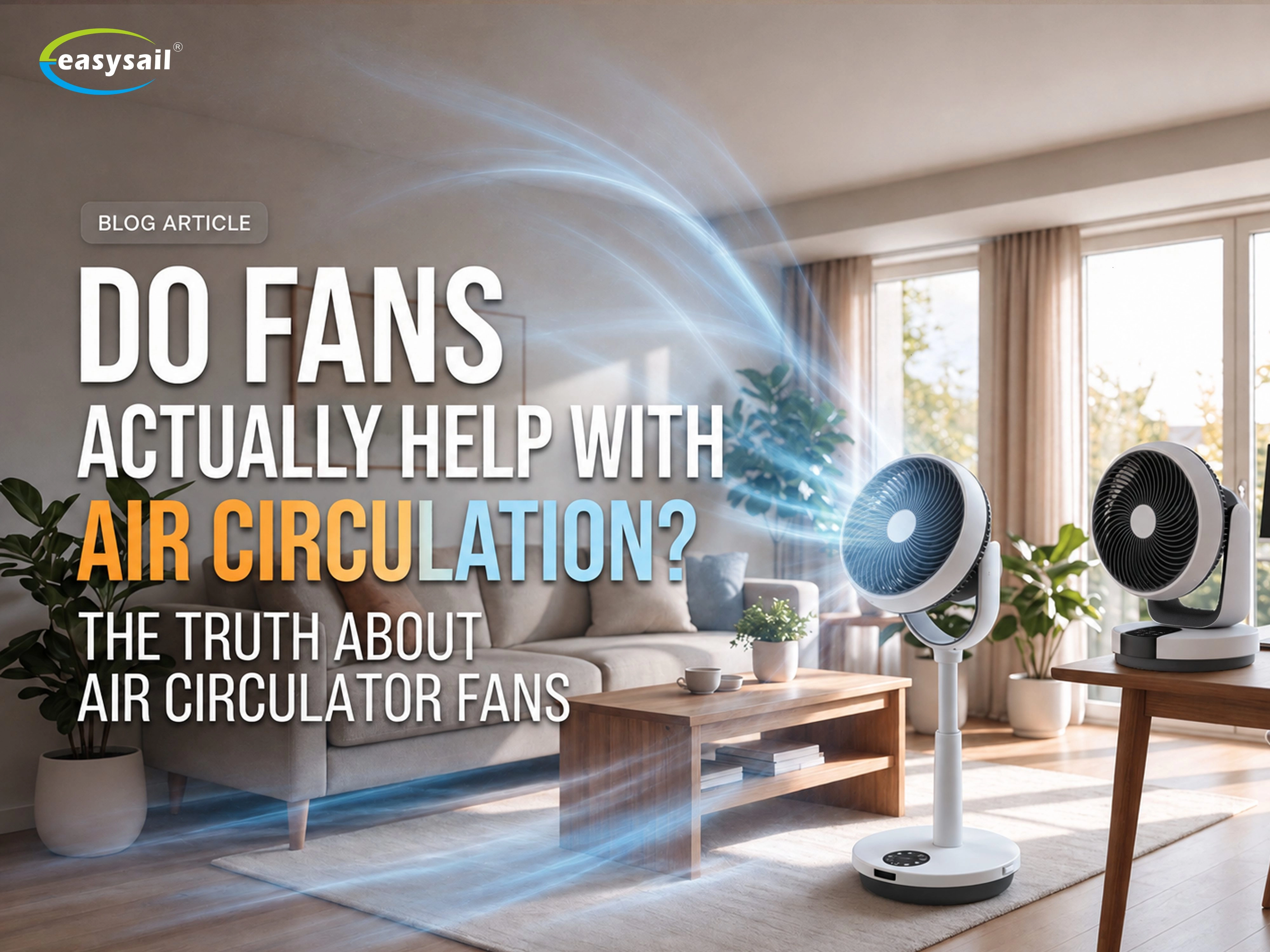
Do Fans Actually Help with Air Circulation? The Truth About Air Circulator Fans
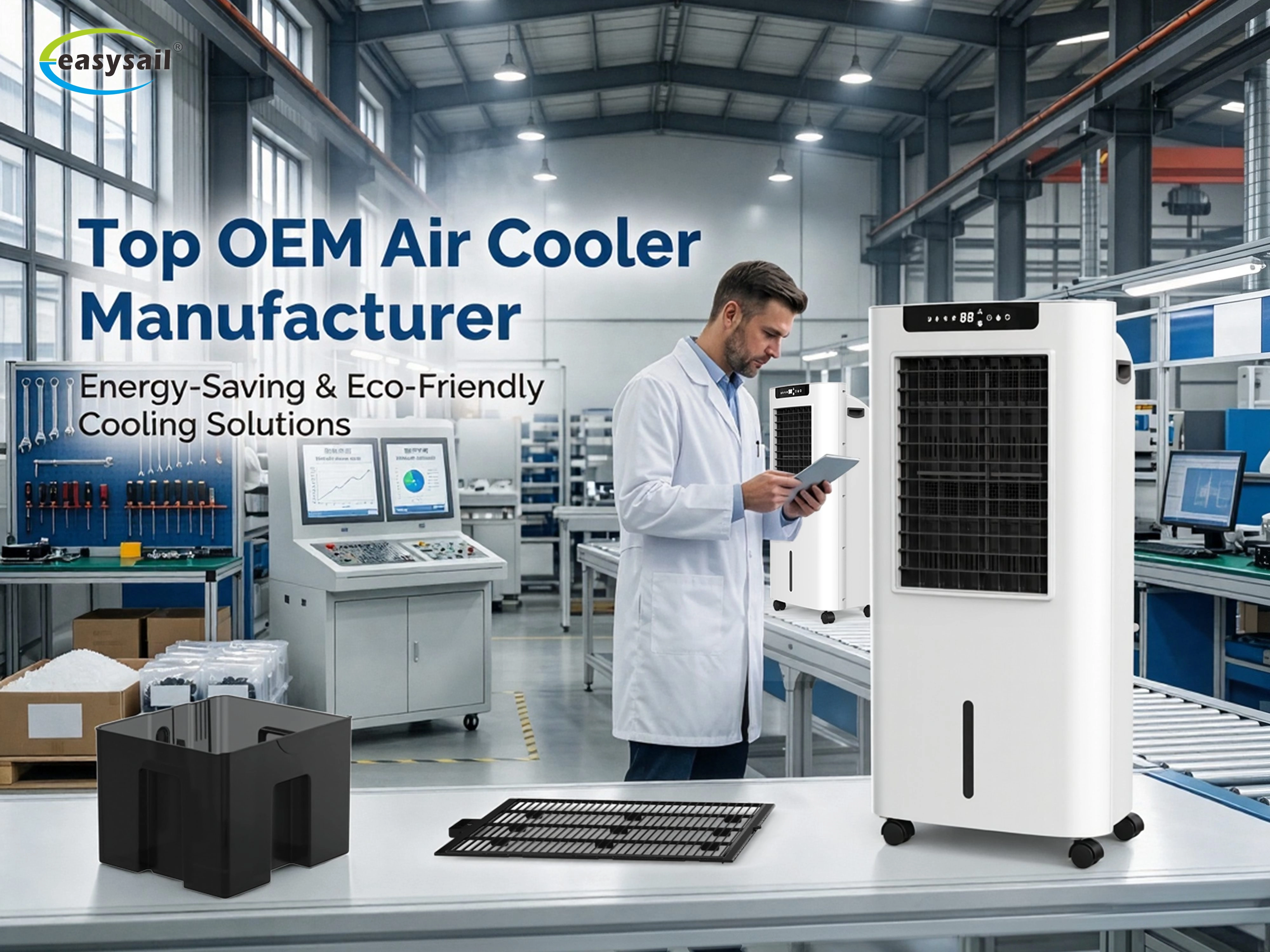
Top OEM Air Cooler Manufacturer: Energy-Saving & Eco-Friendly Cooling Solutions

HWA-M Electric Wire Heater with Adjustable Thermostat
The Easysail HWA-M electric wire heater features 3 heat settings (Low Medium High) and an adjustable thermostat for flexible temperature control. Designed with a power indicator light and tip-over safety function, it ensures safe and reliable heating with simple and durable operation.

White Electric Ceramic Heater HPA-1
Easysail’s White Electric Ceramic Heater HPA-1 offers efficient, portable warmth with advanced ceramic technology. As a leading electric ceramic heater manufacturer, we ensure reliable performance and safety. Ideal for home or office, this compact heater delivers fast, energy-saving comfort wherever you need it.

HPA-1 PTC Electric Heater with Dual Heating Elements LED Display
The Easysail HPA-1 electric heater features dual PTC heating elements for fast and efficient heating. With LED display and electronic control, 3 modes, and adjustable temperature from 18–35°C, it ensures precise comfort. The remote control, 60° oscillation, timer, and safety protection system provide convenient and reliable use.

Electric Ceramic Heater HPA-S
Experience cozy warmth with the Easysail HPA-S Electric Ceramic Heater. This energy-efficient electric heater delivers fast, consistent heat, making it an ideal ceramic heater for any space. Enjoy reliable comfort and lower bills.
Get the Latest Updates
Have a specific question or need more details?
Fill out the form, and our team will get back to you with the information you need.

Easysail is a leading manufacturer specializing in the R&D, production, and sales of high-end two-season small home appliances.
Contact
We’re just a call away.
+86 757 2281 5038
Got a question?
YouTube
Instagram
Facebook